Wetland BioSensors
An open-source, Jetson-powered biomonitoring stack the LMU capstone I mentor is building for the LA coast — a sensing layer for the World Genome Academy.
Every year I mentor an engineering capstone at Loyola Marymount, mostly with engineering students drawn to aerospace and space-systems work — people learning to build things that survive hard environments and phone home reliably. The trick, as a mentor, is helping them point that skill at a problem that matters. The one we landed on is close to home: nobody is really watching what’s alive along the Los Angeles coast, in the fragile band between the tide line and the wetlands.
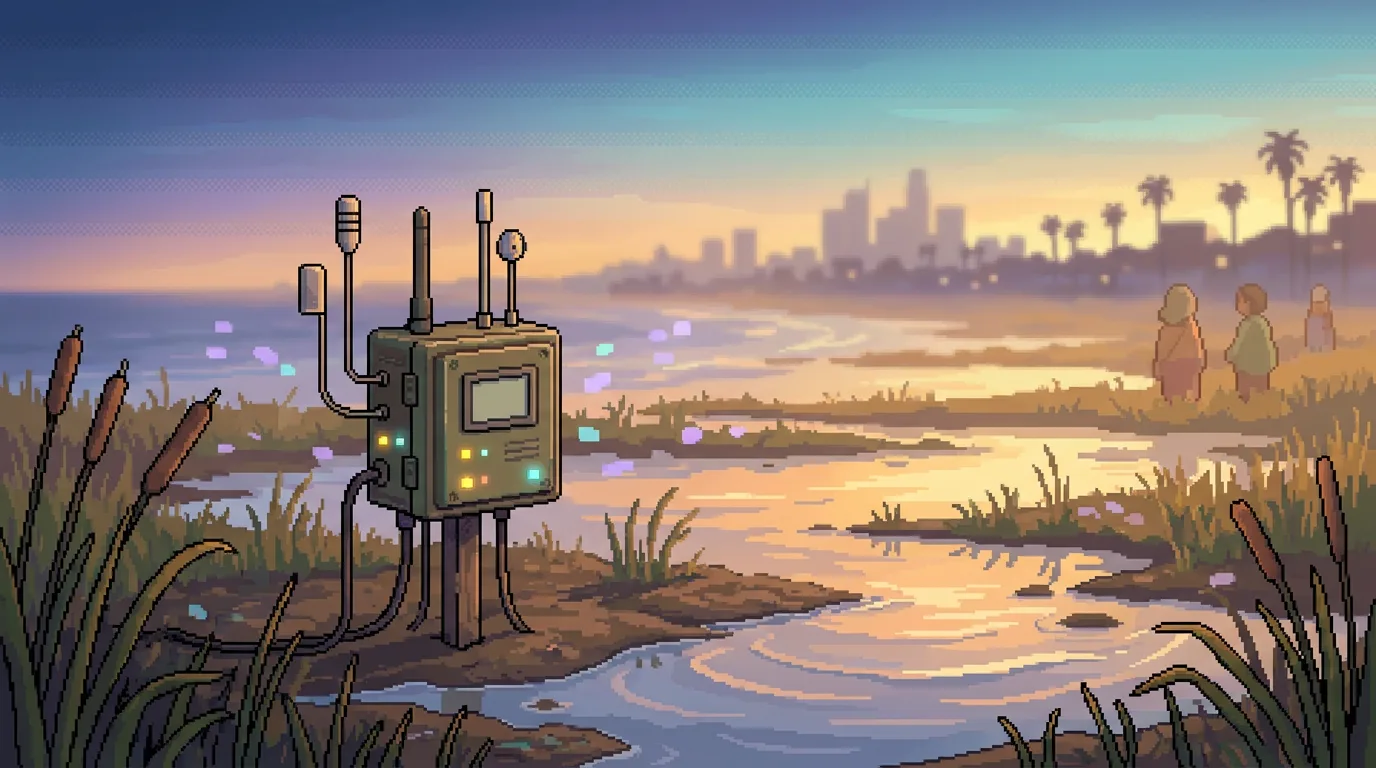
So that’s what the students are building — a small, open-source biomonitoring stack you can leave outside. The compute is an NVIDIA Jetson, the sensing is an array of environmental sensors, and the whole thing is hardened for outdoor deployment with as light an ecological footprint as we can manage. Because the Jetson runs AI at the edge, the idea is for each node to do its own work in the field — reading its sensors, running models on-device, and sending back signal instead of raw noise. Picture an AI-powered data-generation node you could stake into a marsh and trust to keep reporting.
The intertidal and wetland zones are a good place to start because they change fast and they matter out of proportion to their size — a lot of the coast’s biodiversity moves through that edge, and it’s exactly the kind of place traditional monitoring misses. A network of cheap, rugged, open-source nodes can watch it continuously in a way a once-a-quarter field survey never could.
The point isn’t the hardware; it’s what the hardware feeds. Each node is meant to become a sensing layer under the World Genome Academy — the same democratize-the-instruments idea, pushed out to the coastline. The students get a real problem and real tools and aim to ship something that can outlive the semester; the goal is to give the coast eyes it hasn’t had before. Aerospace engineers meet ecologists, and the LA coast gets a little easier to hear. Keeping it open-source is the whole game: the next school down the road shouldn’t have to start from scratch to watch its own patch of water.