Crow Language
Edge AI bio-monitoring network using Google Coral TPU to find mathematical patterns in crow vocalizations — Venice Beach citizen science at its weirdest and best.
This one started with a question nobody asked us to answer: do crows have grammar?
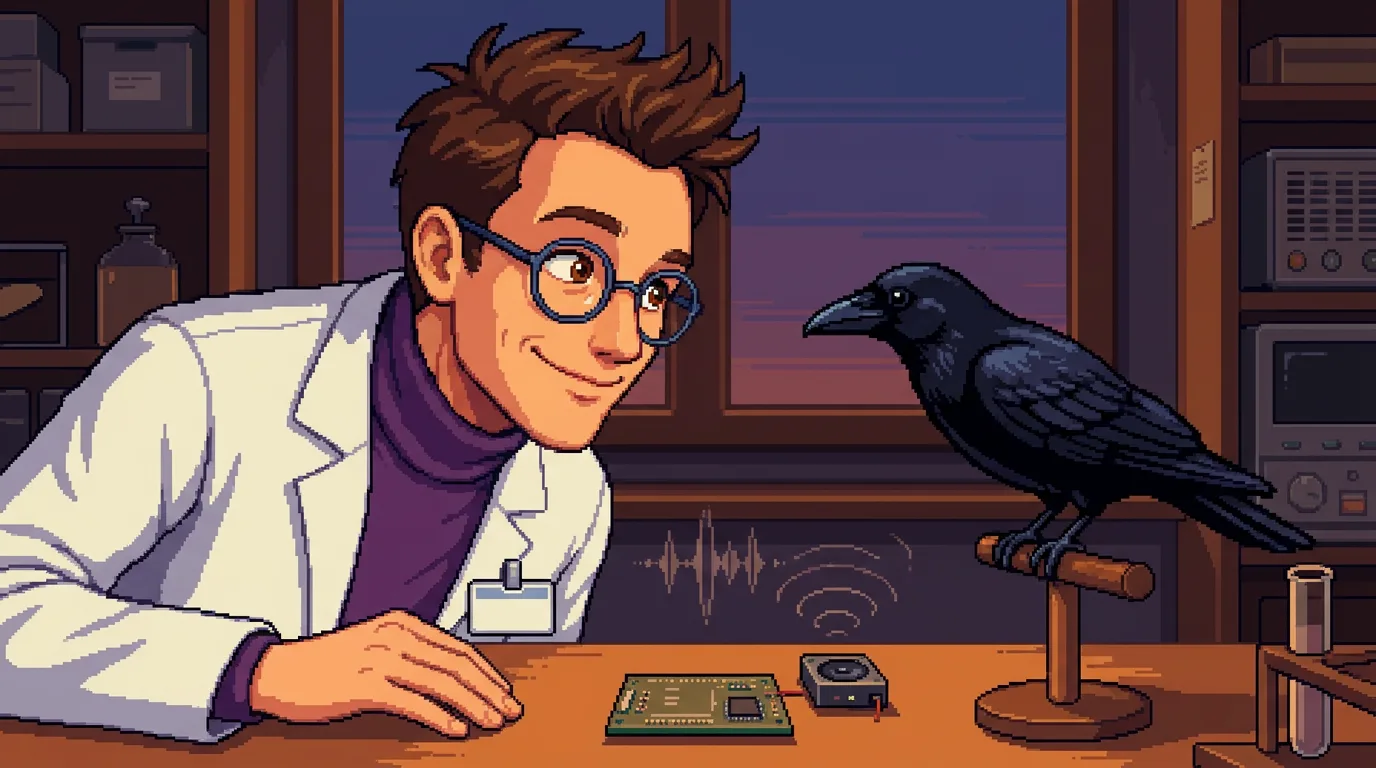
At SpacePost Labs in Venice Beach, we built a small audio-monitoring network — a Raspberry Pi paired with a Google Coral TPU — and pointed it at the local crows. The Coral TPU hackathon gave us the hardware; curiosity supplied the rest. A TPU is just a chip built to run AI models efficiently, small and cheap enough to sit outside on a wire instead of inside a data center. That last detail turned out to matter more than the crows did.
What we heard was stranger and lovelier than we expected. We trained a small BERT model — the same family of model that learns patterns in human language — on our own recordings and asked it to look for call-and-response. It found temporal structure: sequences with consistent timing, responses that followed calls, something that looked like conversational turn-taking. I want to be careful here, though. Patterns that suggest structure are not the same as proof of language. But it was enough to make you lean in and listen harder.
The real idea that emerged wasn’t about crows at all. It was a way of doing science: edge-compute bio-monitoring — putting AI listening devices out in ecosystems instead of hauling the ecosystem back to the lab. Behind every data point was something alive, doing something we didn’t understand yet.
The best part? Hundreds of crows started following the researchers around Venice Beach during data collection. Crows remember faces, and they knew we were listening. Whether that’s science or comedy depends on where you’re standing. I think it’s both — and that’s exactly the kind of project Science Stanley exists to tell stories about.